HALL OF FAME
> Legendary glitches that changed gaming history forever. These iconic bugs, exploits, and discoveries have earned their place in the pantheon of gaming greatness.

Backwards Long Jump (BLJ)
Unknown Game
## About This Glitch By repeatedly long jumping backwards on stairs, Mario can build up infinite speed and clip through walls, doors, and entire sections of the game. ## Impact on Gaming Revolutionized Super Mario 64 speedrunning and enabled sub-10-minute completions of a game designed to take hours. ## Legacy - Defined speedrunning as we know it - Still used in world record runs today - Inspired glitch hunting in countless 3D platformers - Subject of multiple YouTube video essays with millions of views

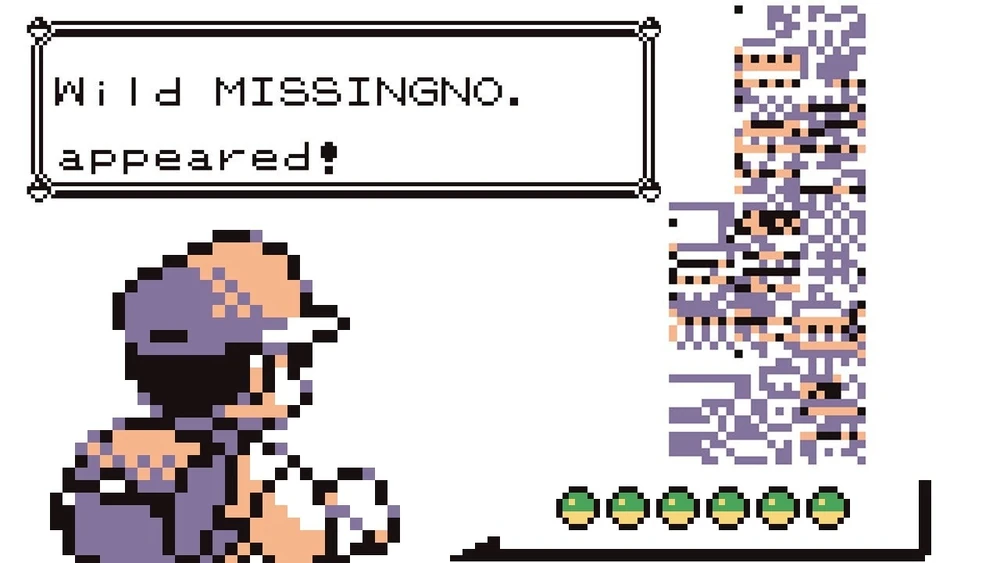
MissingNo.
Unknown Game
## About This Glitch The legendary glitch Pokémon that corrupted save files, duplicated items, and became a cultural icon. Accessed through the Old Man glitch in Viridian City. ## Impact on Gaming Spawned an entire subculture of glitch hunting and became one of the most famous video game bugs in history. ## Legacy - Inspired generations of glitch hunters - Featured in countless gaming documentaries - Became a permanent part of gaming culture - Led to increased interest in how games work internally


Nuclear Gandhi
Unknown Game
## About This Glitch Gandhi's aggression was set to 1, the lowest. When democracy reduced aggression by 2, it underflowed to 255 - the maximum - making Gandhi a nuclear warmonger. ## Impact on Gaming Created one of gaming's most enduring memes and legends, though its exact origins remain debated. ## Legacy - Became gaming's most famous integer overflow - Gandhi's nuke-happy nature was made canon in later games - Taught millions about integer underflow bugs - Spawned countless memes and references
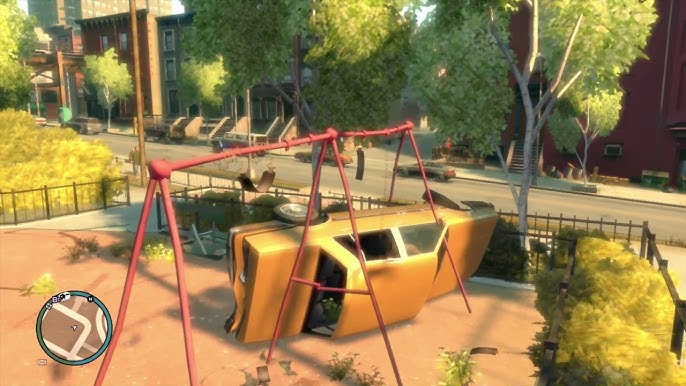
Swing Set of Death
Grand Theft Auto IV
## About This Glitch A swing set in Broker that launches any vehicle (and player) into the stratosphere due to physics engine conflicts. ## Impact on Gaming Became the most iconic GTA glitch and was intentionally left unpatched by Rockstar due to fan demand. ## Legacy - Millions of compilation videos created - Rockstar intentionally preserved it - Spawned 'swing set challenge' competitions - Referenced in later GTA games as easter eggs

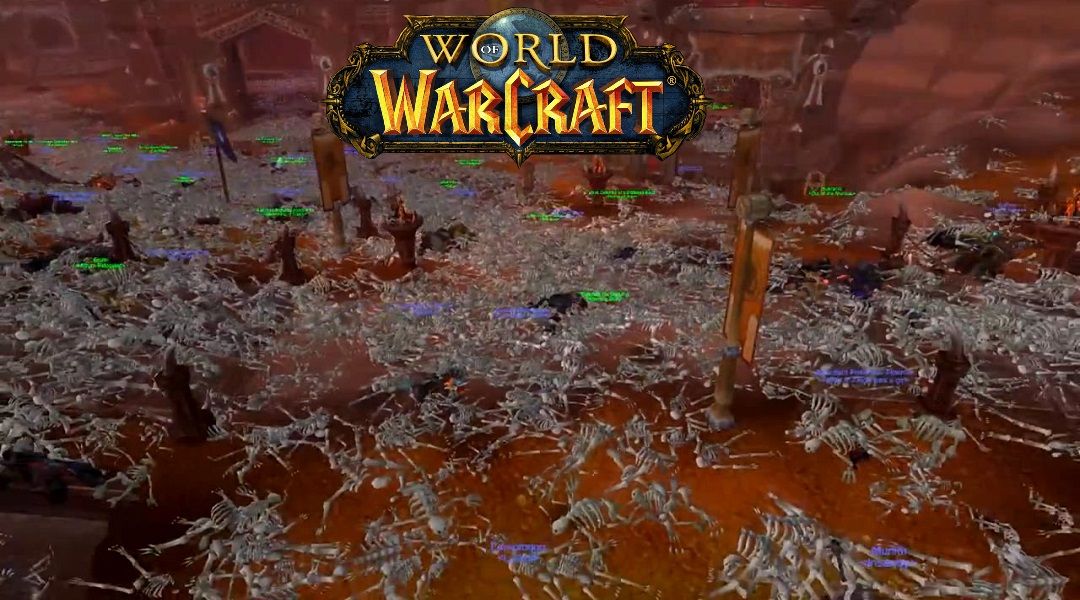
The Corrupted Blood Incident
World of Warcraft
# The Corrupted Blood Incident: A Virtual Pandemic That Changed Science ## Overview On September 13, 2005, World of Warcraft experienced what would become one of the most infamous events in gaming history. A programming oversight transformed a routine boss encounter into an uncontrolled virtual pandemic that infected millions of players, made major cities uninhabitable, and ultimately caught the attention of the CDC and epidemiologists worldwide. What began as a bug became a landmark moment in both gaming and scientific research—demonstrating that virtual worlds could capture authentic human responses to disease outbreaks in ways that mathematical models never could. ## The Outbreak Begins ### Zul'Gurub and Hakkar the Soulflayer Blizzard Entertainment introduced the Zul'Gurub raid on September 13, 2005—a 20-player dungeon featuring the boss Hakkar the Soulflayer. During the encounter, Hakkar would cast a debuff called **Corrupted Blood** on raid participants. The mechanics were straightforward: - **Damage**: 263-337 hit points every 2 seconds - **Transmission**: Spread to nearby players automatically - **Duration**: 10 seconds or until Hakkar was defeated - **Intended scope**: Limited to the Zul'Gurub raid instance only Developers designed Corrupted Blood as a raid mechanic—Hakkar would drain players' blood to heal himself, taking damage from infected blood in the process. It was meant to stay in the boss room. It didn't. ### The Programming Oversight The critical bug: **hunter pets could carry the infection outside the raid**. When players dismissed their infected animal companions mid-fight (placing them in "suspended animation"), the pets retained the Corrupted Blood debuff. Developers had forgotten to include code that would remove the debuff when the raid ended. After defeating Hakkar, players would use fast travel to reach major cities like Ironforge and Orgrimmar to repair damaged gear. When they resummoned their pets in these densely populated urban centers, the pets became **disease vectors**, spreading Corrupted Blood to every nearby player. **Non-player characters (NPCs)** made it worse. Quest-givers and merchants could contract the disease but couldn't die, becoming **asymptomatic carriers** who infected every player they interacted with. ### Exponential Spread Within hours, Corrupted Blood became pandemic across Azeroth: - Major cities became death zones within 30 seconds of exposure - Low-level characters died almost instantly - Streets filled with hundreds of player skeletons - No index case was ever identified - An estimated **4+ million players** were affected <table> <thead> <tr> <th>Timeline</th> <th>Event</th> </tr> </thead> <tbody> <tr> <td>September 13, 2005</td> <td>Zul'Gurub raid released; Corrupted Blood escapes via hunter pets</td> </tr> <tr> <td>September 16, 2005</td> <td>Blizzard acknowledges the issue at 1:15 PM EDT</td> </tr> <tr> <td>Mid-September</td> <td>Quarantine zones attempted; players bypass containment</td> </tr> <tr> <td>Late September</td> <td>Rolling server restarts fail to stop outbreaks</td> </tr> <tr> <td>October 8, 2005</td> <td>Hard reset and patch 1.8.0 make pets immune to Corrupted Blood</td> </tr> </tbody> </table> ## Human Behavior in Crisis ### The Healers Player characters with healing abilities rushed to major cities as impromptu **first responders**. However, most became infected and died themselves. Only Paladins could remove debuffs like Corrupted Blood, but they risked immediate reinfection. More often, healers kept infected players alive and contagious longer—inadvertently **prolonging the outbreak** rather than containing it. ### The Altruists Some players stood at the edges of infected cities, warning newcomers: > "Don't enter. Plague inside." Others became **town criers**, using the game's "yell" chat function to broadcast pandemic updates across regions. Players created informal information networks to track which zones were safe. ### The Quarantined Many players enacted **self-imposed quarantine**, remaining in remote wilderness areas rather than risking infection in cities. Some stopped playing entirely until the crisis passed. ### The Griefers **Griefers** (players who derive enjoyment from harming others) deliberately contracted Corrupted Blood and traveled to population centers to spread it. One griefer told *Wired*: > "It's just funny to watch people run away screaming." Epidemiologist Nina Fefferman compared these players to **Typhoid Mary**—an asymptomatic carrier who resisted quarantine and deliberately infected others. ### The Curious Despite warnings, some players visited infected areas out of curiosity, believing they could survive or be healed. They contracted the disease and spread it to new regions. <table> <thead> <tr> <th>Virtual Behavior</th> <th>Real-World Parallel</th> </tr> </thead> <tbody> <tr> <td>Healers rushing to aid infected players</td> <td>Healthcare workers overwhelmed during COVID-19</td> </tr> <tr> <td>Self-quarantine in wilderness areas</td> <td>Lockdowns and social distancing</td> </tr> <tr> <td>Griefers deliberately spreading infection</td> <td>Anti-maskers and quarantine violators</td> </tr> <tr> <td>NPCs as asymptomatic carriers</td> <td>Asymptomatic COVID/flu transmission</td> </tr> <tr> <td>Fast travel spreading disease</td> <td>Air travel in SARS and COVID-19</td> </tr> <tr> <td>Misinformation on chat forums</td> <td>Pandemic misinformation on social media</td> </tr> </tbody> </table> ## Blizzard's Response Blizzard struggled to contain the outbreak: 1. **Quarantine zones** - Barriers placed around infected areas. Players found ways to bypass them. 2. **Rolling server restarts** - Temporarily cleared the plague, but outbreaks re-emerged as players repopulated cities. 3. **Manual pet checks** - Developers couldn't efficiently scan every animal companion in the game for infection. After **one week** of failed containment, Blizzard performed a **hard reset** on all servers, reverting Azeroth to its pre-pandemic state. On October 8, 2005, patch 1.8.0 made pet companions immune to Corrupted Blood entirely. The pandemic lasted **nearly four weeks**. ## Scientific Legacy ### CDC Interest The **Centers for Disease Control and Prevention (CDC)** contacted Blizzard after the incident, asking to use data from what they assumed was a **planned disease simulation**. Blizzard informed them it was an accidental software bug with no usable research data. ### Published Research Despite being unintentional, the Corrupted Blood incident attracted serious academic attention: <table> <thead> <tr> <th>Researcher(s)</th> <th>Institution</th> <th>Publication</th> <th>Focus</th> </tr> </thead> <tbody> <tr> <td>Ran Balicer</td> <td>Ben-Gurion University</td> <td>Epidemiology (2007)</td> <td>Compared pet transmission to avian influenza spread via asymptomatic ducks</td> </tr> <tr> <td>Eric Lofgren & Nina Fefferman</td> <td>Rutgers University</td> <td>The Lancet Infectious Diseases (2007)</td> <td>Analyzed player behavior patterns mirroring real pandemic responses</td> </tr> </tbody> </table> ### Why It Mattered to Science Traditional epidemiological models rely on **mathematical assumptions** about human behavior during pandemics. These models struggle to account for: - Irrational decision-making - Altruistic risk-taking - Malicious actors - Information spread and misinformation **MMORPGs like World of Warcraft capture authentic human responses** because: - Players are emotionally invested in their characters - Social connections create real consequences - Behavior emerges organically rather than being modeled - Large-scale data captures diverse response patterns As researcher Dmitri Williams noted, the incident demonstrated that "players seemed to really feel they were at risk and took the threat of infection seriously, even though it was only a game." ### COVID-19 Parallels (2020) When the COVID-19 pandemic struck in 2020, researchers returned to Corrupted Blood as a predictive model. Similarities included: - Dense urban areas hardest hit - Healthcare workers becoming infected while treating patients - Quarantine resistance and bypass attempts - Deliberate non-compliance spreading disease - Misinformation complicating response - Fast travel (air travel) accelerating global spread The **Elysium Project** ran a "Pandemic in Azeroth" experiment mimicking both Corrupted Blood and COVID-19, achieving an 88% infection rate that dropped to 42.2% with sanitation and isolation measures. ### Limitations as a Model Critics noted important differences: - **No permanent death** - Characters respawn, reducing risk perception - **No immunity** - Players couldn't develop resistance - **Unrealistic transmission rate** - Higher than any real-world pathogen - **Game incentives** - Players "encouraged to behave in ways you would never behave offline" ### Bioterrorism Research Charles Blair of the Center for Terrorism and Intelligence Studies suggested that griefer behavior during Corrupted Blood could **augment bioterrorism research**, providing models for how bad actors might deliberately spread disease during a crisis. ## Legacy in Gaming ### Intentional Plagues Blizzard learned from the incident's popularity: **2008 - Wrath of the Lich King Zombie Plague:** - Mysterious crates appeared in cities, infecting inspecting players - 10-minute window to cure before transformation into zombies - Curable via healing spells or NPC aid - Ended October 28 after player complaints about griefing **2020 - Shadowlands Scourge Invasion:** - Designed with opt-in mechanics to reduce griefing - Criticized for affecting new players in starting zones - Isolated new player area (Exile's Reach) protected from pandemic **2012 - Star Wars: The Old Republic Rakghoul Plague:** - Intentional pandemic by BioWare inspired by Corrupted Blood - Signature cough before zombie transformation - Players conducted business in remote areas to avoid infection - Infected players received special items - Designed to encourage positive interactions vs. griefing ## Cultural Impact The Corrupted Blood incident remains one of gaming's most studied events—a perfect storm of programming oversight, emergent player behavior, and scientific insight. It demonstrated that virtual worlds aren't just entertainment; they're **living laboratories** for studying human nature under crisis. No index case. No cure. Four million infected. And a legacy that helped prepare scientists for real-world pandemics two decades later. ## Further Reading - Balicer, R.D. (2007). "Modeling Infectious Diseases Dissemination Through Online Role-Playing Games." *Epidemiology*. - Lofgren, E.T. & Fefferman, N.H. (2007). "The untapped potential of virtual game worlds to shed light on real world epidemics." *The Lancet Infectious Diseases*.
KNOW A LEGENDARY GLITCH?
Nominate a glitch for the Hall of Fame. Community voting opens annually.